Commercial drone operations across Australia are expanding rapidly. From surveying land and inspecting roofs to filming events and marketing real estate, drones have transformed how businesses capture visuals and collect data.
Because drones operate in shared public spaces, safety is the highest priority. The Civil Aviation Safety Authority (CASA) sets clear rules about flying drones near people to reduce the risk of injury if something goes wrong.
Whether you're a new remote pilot, a photographer adding a drone to your services, or a business exploring aerial operations, this guide explains Australia's separation rules and the steps required to legally fly closer to people.
Operations Over or Near People (OONP) is the term used by the Civil Aviation Safety Authority (CASA) to describe drone operations conducted closer to people than the standard operating rules normally allow. Understanding when these rules apply is essential for anyone conducting commercial drone operations in Australia.
How to Get Started: The 3 Operational Paths
Path 1: Excluded Category
What it is
Certain commercial drone operations can be conducted without holding a Remote Pilot Licence (RePL) or RPA Operator's Certificate (ReOC), provided they qualify as excluded operations. Operators must register the drone, obtain CASA accreditation, and comply with the standard operating conditions.
The rule
You must comply with the standard operating conditions, including remaining at least 30 metres horizontally from people who are not associated with the flight. If your work requires flying closer than this, you'll generally need to operate under a ReOC or obtain a specific CASA authorisation.
Path 2: Remote Pilot Licence (RePL)
What it is
A Remote Pilot Licence (RePL) is an individual qualification obtained by completing training through a CASA-certified training provider.
What it allows
A RePL demonstrates that you are qualified to operate commercial drones. However, holding a RePL by itself does not allow you to reduce the 30-metre separation distance. To conduct reduced-distance operations, you must operate under a ReOC that has the appropriate operational procedures.
Path 3: RPA Operator's Certificate (ReOC)
What it is
A RPA Operator's Certificate (ReOC) is issued by CASA to organisations conducting commercial drone operations.
What it allows
A ReOC enables an organisation to establish documented operational procedures and safety management systems. Subject to CASA's requirements, including documented procedures, risk assessment and informed consent from affected people, RePL-qualified remote pilots operating under that ReOC may conduct flights as close as 15 metres from people without applying for a separate approval for every operation.
Why CASA Has Rules About Flying Near People
Drones range from lightweight consumer aircraft to larger commercial systems weighing many kilograms. If a battery fails, a propeller breaks, or another critical malfunction occurs, a drone can fall and potentially cause serious injury or property damage.
CASA's separation rules create a safety buffer around people to minimise the likelihood of someone being struck if an incident occurs
The Baseline: The Standard 30-Metre Separation Rule
For most drone flights in Australia, the starting point is the 30-metre rule.
The baseline rule: Keep your drone at least 30 metres horizontally from any person who is not directly involved in the control and navigation of the drone.
The separation distance is measured horizontally. Flying directly above someone, even at 100 metres altitude, does not satisfy the rule because the horizontal distance is effectively zero.
Who Is Considered an "Essential Person"?
A common misconception is that anyone involved in a project automatically becomes "essential." Under CASA's rules, this is not the case.
People considered essential are those directly involved in the control and navigation of the drone operation, such as:
- The Remote Pilot in Command
- A Visual Observer (VO) performing a safety role
- Another crew member carrying out a safety-critical function directly related to operating the drone
The following are not considered essential simply because they are participating in the project:
- Clients
- Directors or agency staff
- Actors, presenters or models
- Athletes
- Construction workers
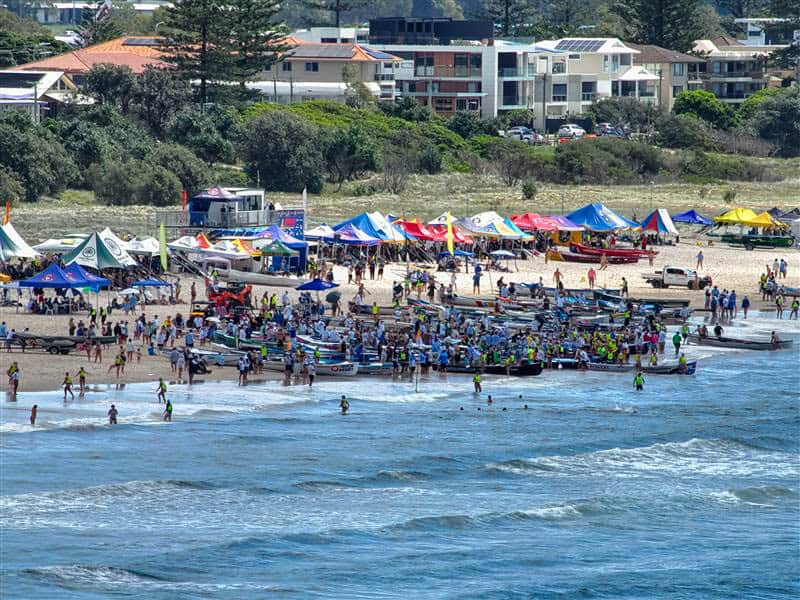
- Spectators
- Members of the public
Paying for the drone service or signing a waiver does not make someone an essential person under CASA's rules.
Why Flying Directly Over People Is Prohibited
CASA generally prohibits flying directly over people without specific authorisation.
When a drone flies directly overhead, there is no horizontal safety buffer. If the aircraft experiences a critical failure, the person below is exposed to the highest level of risk.
For this reason, even operations conducted under the 15-metre provisions are not permitted to simply fly over people unless specifically authorised by CASA.
Unlocking the 15-Metre Rule
Many commercial operators hear about the "15-metre rule" and assume it automatically applies once they have a Remote Pilot Licence (RePL). This is one of the most common misconceptions in the industry.
The ability to operate as close as 15 metres horizontally from people is not granted simply because a pilot holds a RePL. It is an operational privilege that must be exercised under an organisation's Remote Operator's Certificate (ReOC), where CASA has accepted the operator's documented procedures for conducting reduced separation operations.
To conduct these flights, the operator must have:
- A current ReOC.
- RePL-qualified remote pilots.
- Documented operating procedures that address reduced separation operations.
- Appropriate risk assessments for each operation.
- Informed consent from people who will be within the reduced separation distance.
- Suitable safety controls and emergency procedures.
Even with these measures in place, operators are still expected to minimise risk wherever possible. Just because a flight can legally be conducted at 15 metres doesn't mean it always should be.
Need Help Understanding Your Options?
Whether you're just getting started with CASA accreditation, looking to obtain your Remote Pilot Licence (RePL), or planning to establish your own Remote Operator's Certificate (ReOC), understanding the regulations is the first step towards safe and compliant drone operations.
At Uncrewed Aviation Australia, we help individuals, businesses and government organisations navigate every stage of the certification process, from pilot training through to ReOC approvals and operational support.
If you're unsure which operational pathway is right for you, get in touch with our team. We're always happy to help point you in the right direction.