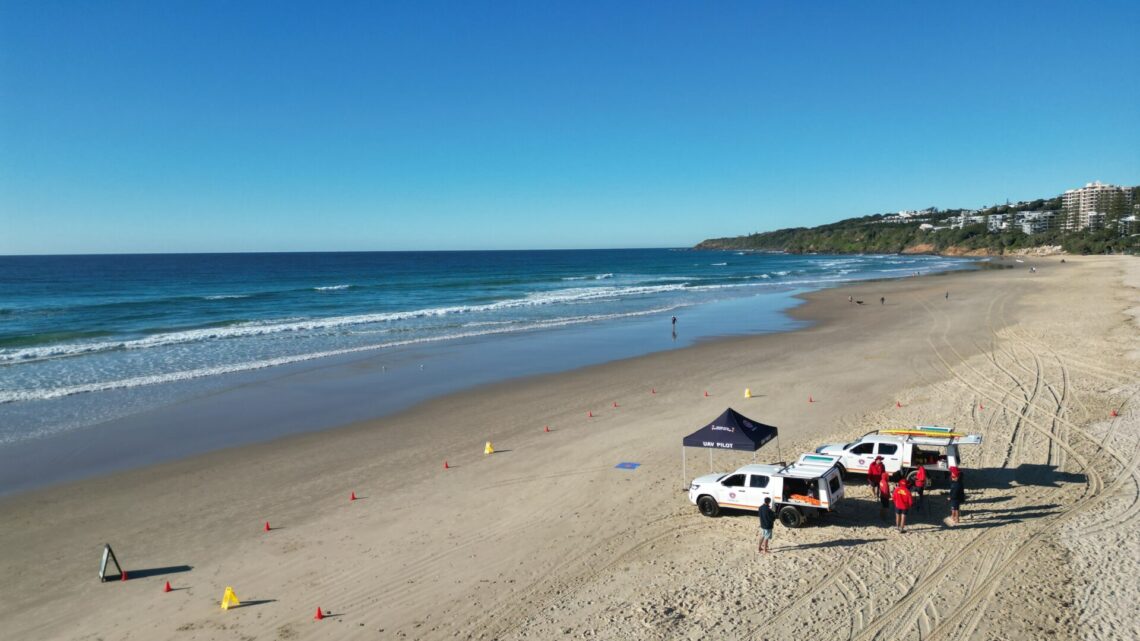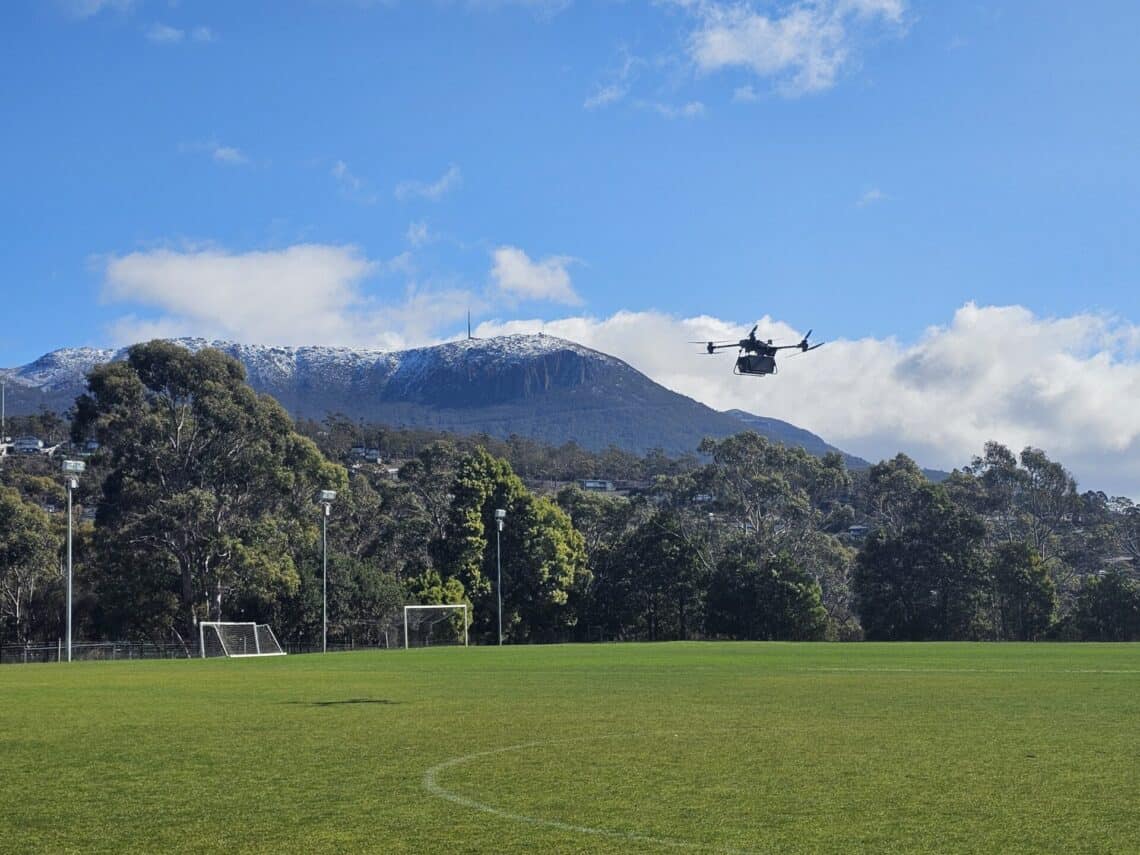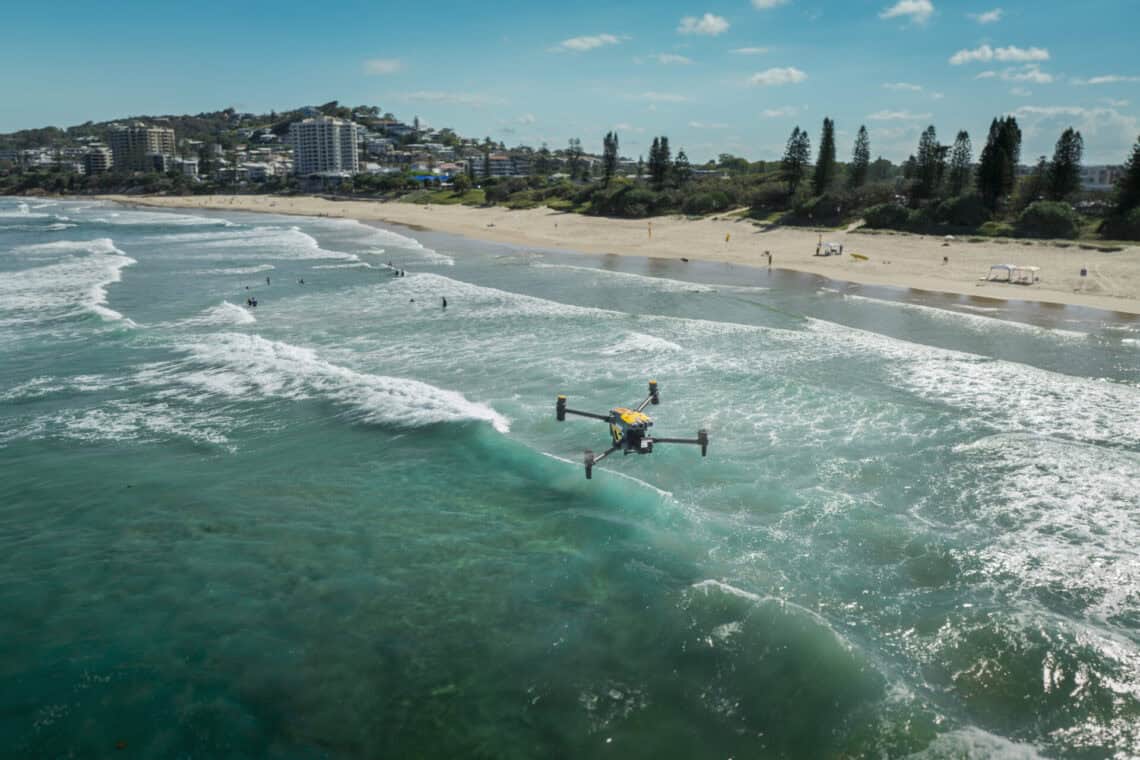
Queensland’s coastline is one of the state’s greatest assets, a place where locals and tourists gather year-round to swim, surf, and enjoy some of the best beaches in the world. Keeping those beaches safe has always been a major priority for Surf Life Saving Queensland (SLSQ), and now, thanks to advancements in drone technology, the way we approach surveillance and beach monitoring is evolving faster than ever.
A recent announcement has confirmed that shark-spotting drones are set to become a permanent part of beach safety operations in Queensland following a multi-year trial across southeast Queensland beaches. The findings highlight what many lifesaving and aviation professionals have known for years: drones offer exceptional situational awareness, fast detection capabilities, and reliable real-time information that enhances the safety of everyone in the water.
As a Drone Licensing Academy owned by and supporting Surf Life Saving Queensland and lifesaving operations, delivering nationally recognised training, we’re proud to be part of this next chapter in coastal safety. Here’s what the results mean, and how our training programs are helping prepare the pilots who will be at the forefront of this work.
A New Era of Aerial Beach Safety
Over the four-year SharkSmart Drone Trial, drones completed close to 18,000 flights over 10 Queensland beaches, covering thousands of kilometres of coastline. These flights gave lifesavers a consistent, bird’s-eye view of the surf zone — an area that is often difficult to monitor effectively from the shoreline alone.
Across the trial period, drones successfully detected hundreds of shark sightings, including large animals over 2 metres in length. Just as importantly, these detections were relayed instantly to lifeguards and lifesavers on the ground, allowing them to make clear, informed decisions about when to call swimmers in, when to pause water activity, and when to resume. This kind of precision has never been more important as beach usage increases, and coastal conditions become more dynamic.
But the value of drones stretched even further than shark detection. Trial pilots also supported surf lifesavers with rip-current monitoring, missing-person searches, and general oversight of crowded beach zones — proving just how versatile and essential this technology has become.

Why Drones Are Transforming Beach Safety
The transition to regular drone operations on Queensland beaches is not simply about introducing new equipment. It’s about upgrading the way we see, understand, and respond to coastal conditions in real time. Here’s why drones have become such a powerful asset:
This makes them a multi-purpose tool that increases safety not just for shark-related incidents, but for beach operations as a whole.
Why Licensed, Professional Drone Training Is Essential for Safe Beach Operations
While drones themselves are impressive tools, their effectiveness, and their legality, depend entirely on the skills, licensing, and training of the pilots behind the controls. Under CASA regulations, any drone being used for paid work, public safety tasks, or organised patrol operations must be flown by a properly licensed Remote Pilot (RePL holder) operating under the oversight of a certified organisation holding a ReOC.
With the Queensland Government expanding drone-based patrols to more beaches, the demand for qualified, licensed, and safety-focused remote pilots will only continue to grow.
Our Pilots Learn:
- How to fly in dynamic outdoor environments, including variable wind, glare, and changing conditions.
- How to communicate, using clear communication and standard operating procedures is key.
- How to meet all CASA licensing and operational rules, including correct airspace usage, risk assessments, record-keeping, and compliant workflows.
- How to manage equipment, batteries, mission planning, and do so safely and efficiently.
We train pilots from the ground up, from complete beginners earning their first Remote Pilot Licence (RePL), through to experienced operators completing upgrades, type ratings, or specialised training for heavier aircraft and advanced operations.

Why Drone Pilots Are Now Essential for Surf Life Saving
The success of the SharkSmart Program shows that drone pilots are no longer a “nice to have.” They are becoming core members of beach patrol teams.
A trained drone pilot brings:
- sharper visibility
- enhanced decision-making
- rapid risk detection
- reliable communication
- and an entirely new layer of safety
As more beaches adopt drone patrols, there will be increasing opportunities for people who want to combine aviation skills with meaningful community impact. For many of our graduates, this isn’t just about learning to fly a drone, it’s about helping keep Queenslanders safe.
A Sustainable, Smarter Approach to Coastal Safety
Another major benefit of drone-based monitoring is its ability to support a more sustainable, technology-driven safety model for the future.
Drones provide:
- non-intrusive monitoring of marine life
- zero-impact data collection
- real-time insights into coastal behaviour
- detailed visibility without disturbing wildlife
This aligns closely with modern approaches to environmental stewardship and responsible beach management, values that are important to surf lifesaving organisations, coastal councils, and local communities alike.
With further advancements in camera quality, long range drones, AI-assisted detection, and automated alerts, drone patrols will become even more capable in the years ahead. Training the next generation of pilots now will be essential in keeping Queensland at the forefront of innovation.
Leading the Future of Beach-Safety Aviation
As drones become a permanent fixture on Queensland beaches, our Academy is proud to support the growth of this important field. Whether it’s training lifesavers, council employees, contractors, or individuals looking to build a career in uncrewed aviation, we’re committed to delivering outstanding, safety-centred training that prepares our graduates for real-world operations.
The ocean will always present challenges, but with the right people, skills, and technology, we can meet those challenges head-on.
If you’re interested in joining the next generation of drone pilots helping protect our coastline, our team is ready to help you get started.