From an ambitious trial to one of Australia's most established drone surveillance programs, here's how QLD's SharkSmart program has evolved, and why its success is influencing the future of commercial drone operations across Australia
Before Drones Became Part of Beach Patrol
For decades, beach safety relied on a combination of surf lifesavers, lifeguards, helicopters and community reports to monitor changing ocean conditions. While these methods remain incredibly valuable today, they each have limitations. Helicopters are expensive to operate, beach towers provide only a limited field of view, and many marine hazards can appear and disappear within minutes.
As drone technology matured, Queensland recognised an opportunity to add another layer of situational awareness, one that was cost-effective, highly mobile and capable of providing real-time aerial vision directly to lifesavers on the beach.
What began as a trial has since become one of Australia's most significant examples of drones supporting public safety.
The Beginning of the SharkSmart Drone Trial
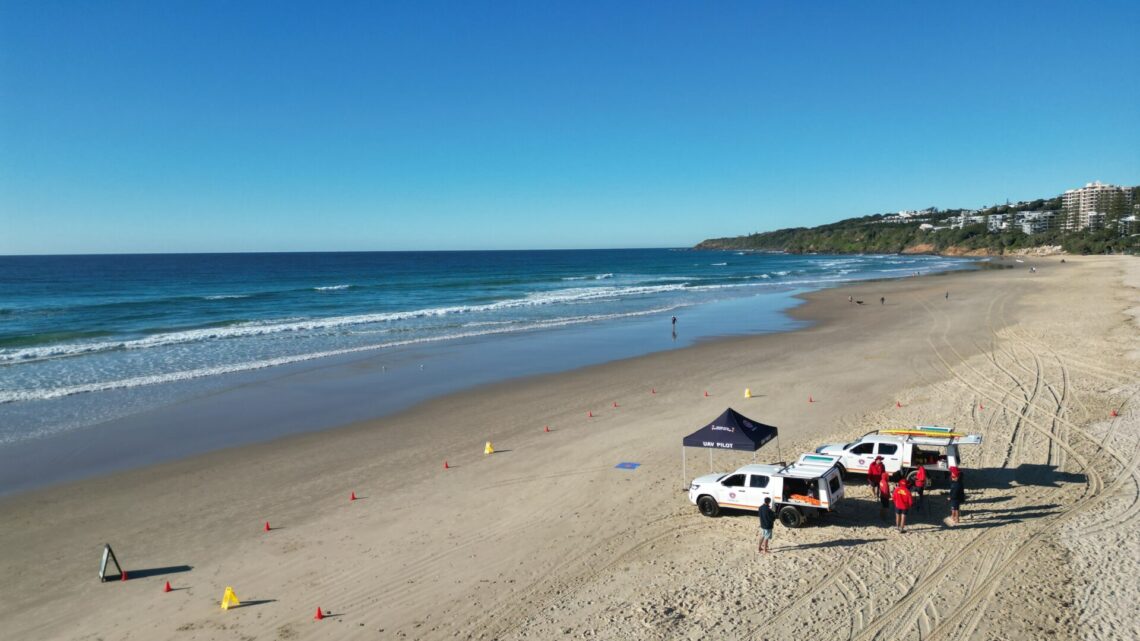
The Queensland Government launched the SharkSmart Drone Trial in September 2020 as part of its broader shark management strategy. Operated by Surf Life Saving Queensland, the program was designed to evaluate whether drones could safely and effectively monitor popular beaches for sharks and other marine hazards while supporting lifesavers on patrol.
Initially operating across several South East Queensland beaches, the trial expanded into North Queensland in 2021, allowing researchers and operational teams to assess how drones performed across different coastal environments.

From Trial to Proven Capability
Over the next four years, the program generated an extraordinary amount of operational data.
Between September 2020 and April 2024:
- almost 18,000 drone flights were completed
- pilots flew more than 7,000 kilometres of coastline
- hundreds of shark sighting events were recorded
- countless other marine hazards and beach safety incidents were monitored.
Just as importantly, the trial demonstrated that drones weren't simply spotting sharks. They were providing lifesavers with a real-time aerial perspective of beach conditions, helping identify stingrays, turtles, bait balls, dangerous surf conditions and people requiring assistance.
The result was a technology that complemented existing patrol methods rather than replacing them.
Behind Every Drone Pilot
One aspect that often receives less attention than the technology itself is the people operating it.
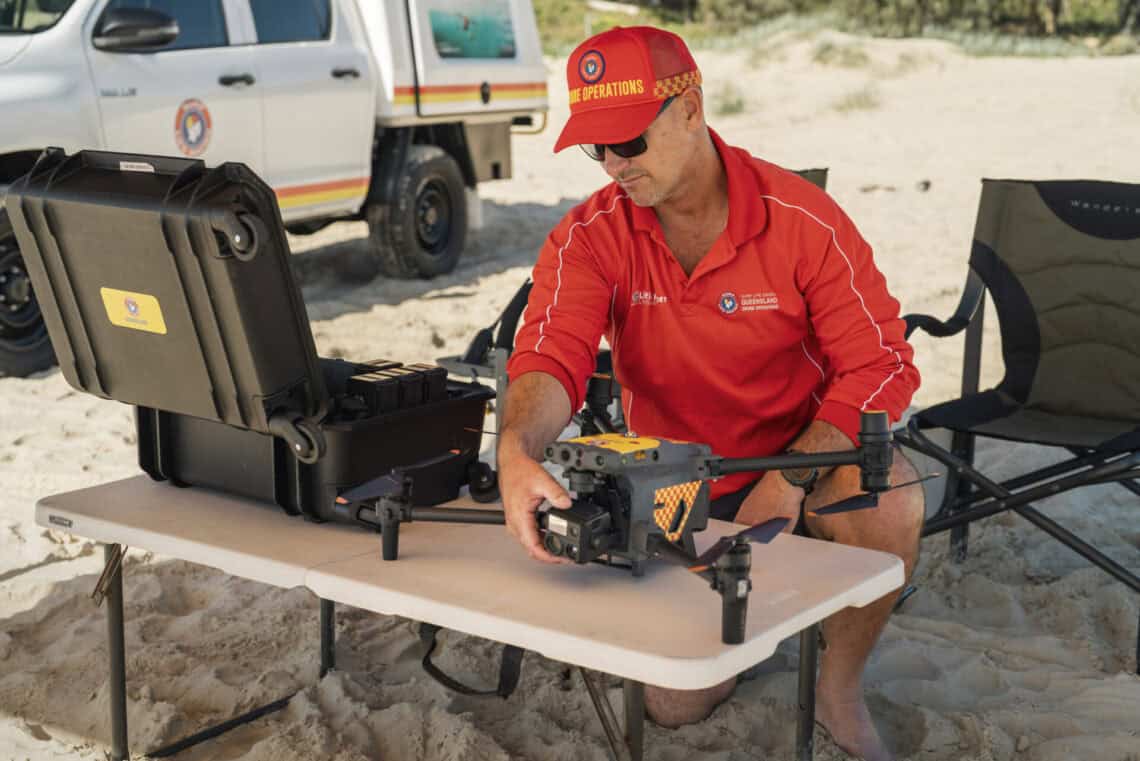
Every SharkSmart flight is conducted by trained Remote Pilot Licence (RePL) holders operating under Civil Aviation Safety Authority (CASA) regulations. Flying over busy public beaches requires more than simply being able to fly a drone, it demands sound decision-making, operational discipline, risk management and an understanding of aviation regulations.
As drone operations became more integrated into beach safety, the importance of standardised pilot training became increasingly clear.

Our Role Behind the Scenes
As part of Surf Life Saving Queensland, Uncrewed Aviation Australia has had the privilege of supporting this journey from both an operational and training perspective.
While many people see the drone flying overhead, there is an enormous amount of work happening behind the scenes to ensure those operations are safe, compliant and repeatable. From pilot training and competency development to operational procedures and ongoing currency, successful public safety drone programs rely on far more than the aircraft alone.
Our instructors don't just teach CASA regulations, they work within an organisation that operates one of Australia's most established public safety drone programs, allowing us to bring practical operational experience into every commercial training course.

A Program That Continues to Evolve
Following the success of the trial, the Queensland Government made the SharkSmart drone program permanent through its Shark Management Plan 2025–2029, with operations expanding to additional beaches across the state. The program continues to explore new technologies, including artificial intelligence, advanced camera systems and extended operational capabilities to further improve beach safety.
This reflects a broader trend occurring across Australia, with more government agencies and public safety organisations recognising the value drones can provide in operational environments.
Why This Matters Now
Recent announcements around increased investment in shark surveillance in other parts of Australia highlight something the Queensland program has already demonstrated over several years: when combined with well-trained pilots and strong operational procedures, drones can become an invaluable part of public safety.
For the commercial drone industry, this continued investment reinforces the growing importance of professional training, operational competence and regulatory compliance. The aircraft may continue to evolve, but skilled pilots remain at the centre of every successful operation.