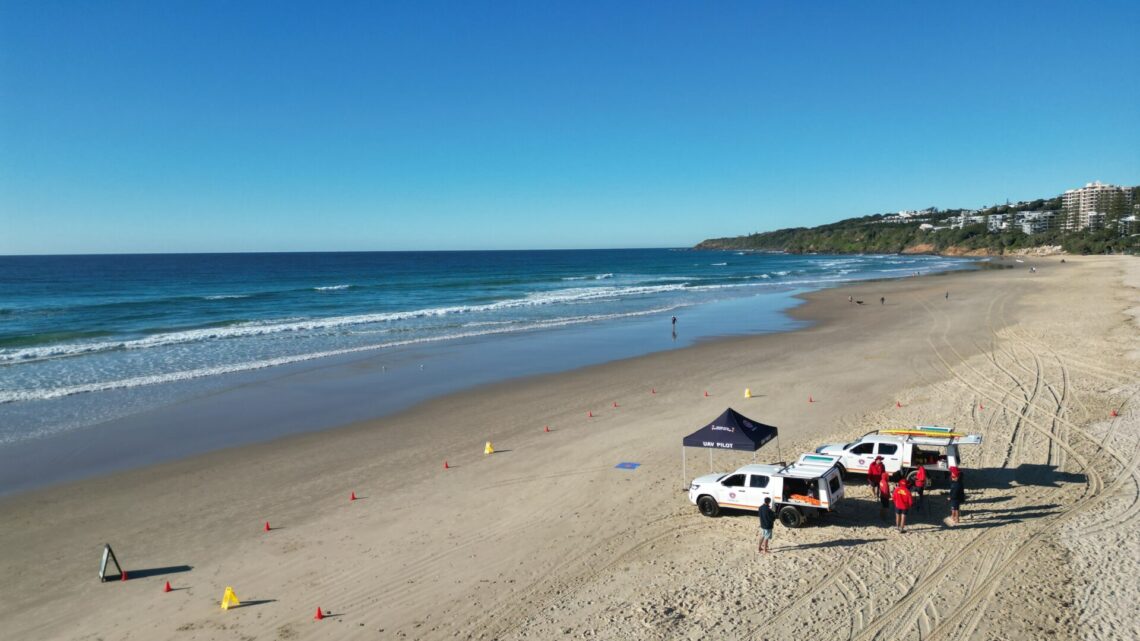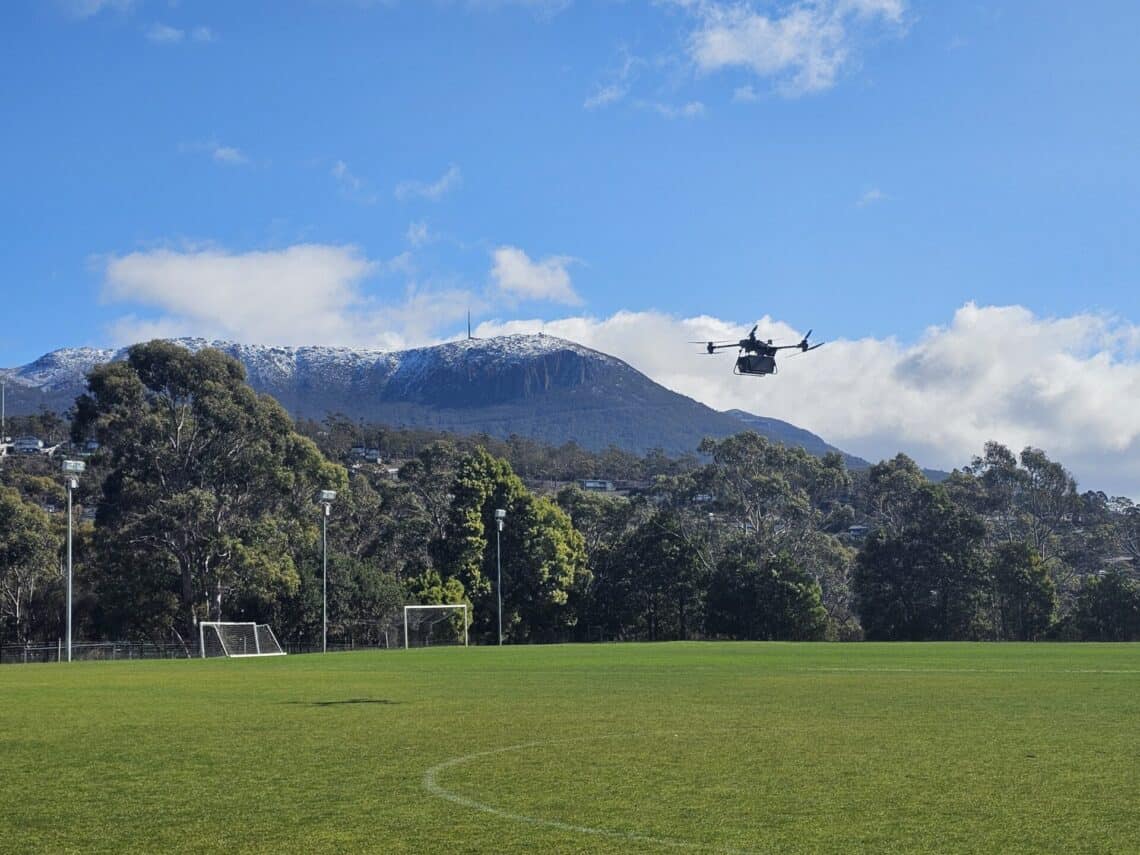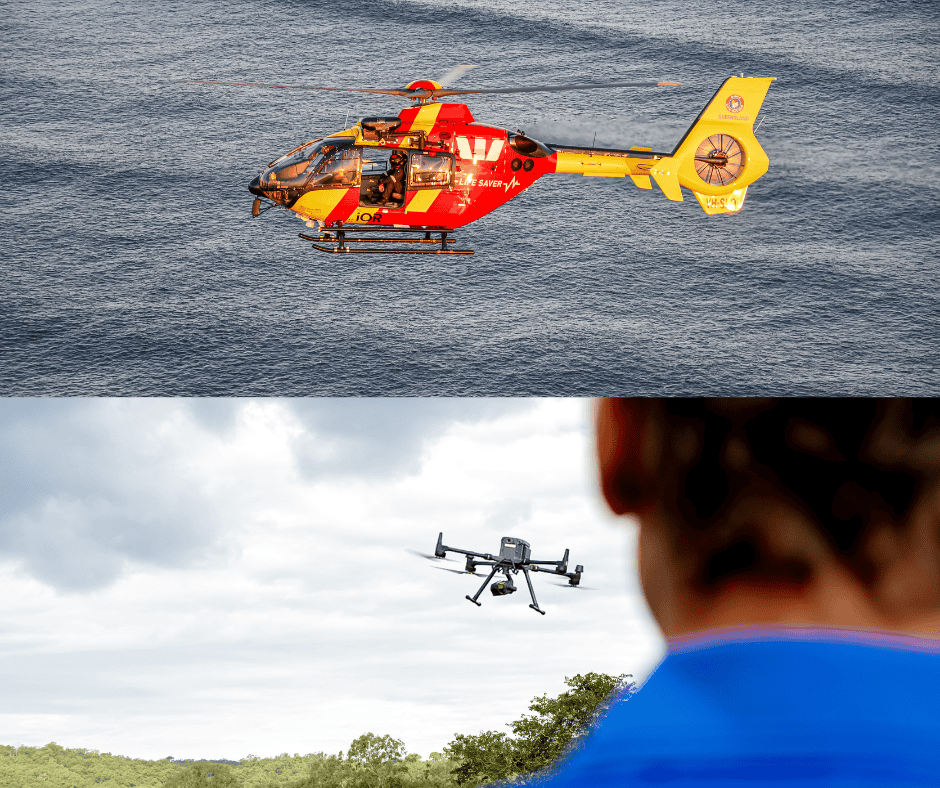
The other week I had the chance to visit the Westpac Lifesaver Rescue Helicopter team. Standing in the hangar next to their aircraft, watching the crew doing their routine maintenance, I was reminded just how closely our work at Uncrewed Aviation aligns with theirs.
Even though we operate on different platforms, we are both part of Surf Life Saving Queensland. They take to the skies in crewed helicopters, while we take flight with drones. Our tools may be different, but the mission is the same: protecting communities, educating the public, and saving lives.

Inside a Westpac Lifesaver Rescue Helicopter Patrol
The Westpac Lifesaver Rescue Helicopter team plays a crucial role in safety across Queensland. While many people associate the service with coastal patrols, their work extends far beyond the beach.
In addition to patrolling busy beaches on weekends, public holidays and during the peak season, the crew responds to emergency call-outs in the hills, hinterland and mountainous terrain. These inland missions can be especially complex, with challenging weather conditions, narrow valleys, heavy updrafts and difficult access. Their work is not just about keeping an eye on the surf, but reaching people wherever they are in distress.
There are three crew members on board during operations: one pilot, one air crew officer, and one rescue crew officer. You may recognise the iconic yellow and red EC135 helicopter, a light twin-engine aircraft widely used in emergency medical services, police and rescue operations across the world. Its compact size, manoeuvrability and strong performance make it ideal for both tight coastal landings and precise flying in rugged inland areas.
The equipment on board changes depending on the mission, but there is always a strong focus on safety and readiness. Range and payload vary depending on weather, temperature and load. The pilots are exceptionally skilled, capable of flying in turbulent conditions, hovering with pinpoint precision during hoist operations and operating safely in environments with unpredictable wind patterns. These are highly trained professionals who make life-saving flying look effortless.

Flying in the Dark, Helicopters & Drones
Night operations in the helicopter are a specialised skill that take years of training and constant practice. The pilots and crew are trained to operate using night vision goggles, which completely change their view of the world. Without goggles, the coastline and inland terrain are cloaked in darkness. With goggles, the scene lights up, but through a narrower field of view. To stay fully aware, the crew must constantly turn their heads and scan the scene.
Operating at night requires more than skill; it requires trust in both the crew and the aircraft. It also demands the right technology. Just like helicopters, drones can also play an important role in night operations when flown by endorsed pilots under an approved ReOC for authorised missions.
With the advanced sensors and thermal imaging technology now available on modern drones, we can support and run operations even in low light or total darkness. When done correctly and legally, this allows drones to provide additional situational awareness for rescue teams both in air and on land and can make a difference in finding people faster.

Weather, Maintenance and Safety
Visibility is everything. If the pilots cannot see clearly, they cannot take off or land. Fog, low cloud and heavy rain can all halt operations. It is a simple but critical rule. This goes for Drones as well. Maintaining a visual line of sight is incredibly important for successful and safe missions. A lowered visibility due to weather can greatly impact our reach.
Maintenance is another pillar of safety. Daily checks and pre-flight inspections are standard procedures alongside regularly scheduled maintenance updates. Because of the saltwater environment they often find themselves in, the team places extra emphasis on maintenance to prevent corrosion and equipment failure.
On board, the helicopter carries essential gear such as a life raft, first aid kits, crew and patient harnesses, multiple radios including aviation, marine and hand-held units, and emergency communication devices. Every piece of equipment is there for a reason, and every mission depends on it.

When Helicopters and Drones Work Together
This is where Uncrewed Aviation and Drones fit into the bigger picture. Drones are not here to replace helicopters. Instead, we are working towards a world where we see increased ability to support and enhance missions by filling in gaps and providing fast, safe access to critical information. With the developing long range capabilities with drones, we can also lead crucial missions and patrols to help cover more ground.
Drones can be used to assess hazards before a helicopter is deployed. They can patrol and search while helicopters refuel or reposition. They can access tight or hazardous areas without risking crew safety. This increases the efficiency and safety of missions, especially in complex or time-sensitive scenarios.
The Westpac Lifesaver Rescue Helicopter team shared some really great stories with me, mentioning that they have already seen how effective this collaboration can be. One example they recalled was a search operation where a drone was tasked with scanning at a set height below the helicopter. By holding its designated altitude and feeding live situational information to the helicopter crew above, it made the entire mission run more smoothly. This type of coordination can give helicopter pilots extra confidence as they approach a scene, especially in hard-to-reach areas. Situational awareness is so important, and drones can help helicopter crews gather information.

The Risk of Getting it Wrong
When drone pilots ignore the rules, the consequences can be serious and sometimes life-threatening. A drone colliding with a helicopter could be catastrophic. It could cause severe damage to the aircraft, endanger the lives of the crew, and place any patient on board in grave danger.
The team shared a real story during my visit that really made an impact on me. They had a patient on board who needed urgent transport. As they were preparing for takeoff, they were forced to wait, and were grounded, all because a private drone operator nearby decided to fly in close to get a better look at the scene. That delay could have had devastating consequences for the patient.
Unfortunately, this is not an isolated scenario. Across Australia, there have been multiple incidents where emergency services have been delayed or disrupted because of uninformed or careless drone use. Even a small consumer drone can pose a serious risk to helicopters and airplanes, particularly during takeoff and landing when there is little room for error.

Rules, Respect and Responsibility
This is why it is absolutely essential that drone pilots follow the rules. CASA has clear regulations in place for a reason.
Drone pilots must stay below 120 metres, keep their aircraft in visual line of sight, and never fly over or near emergency operations. If you see or hear a helicopter or plane approaching, you should ground your drone immediately. It is not a suggestion. It is a safety requirement designed to protect everyone involved.
When licensed drone pilots operate under a ReOC with clear communication protocols in place, the risk of conflict is extremely low. The real danger comes from those who are unaware or choose to ignore the rules.
Every time a helicopter is forced to divert, hold or delay because of a drone, precious seconds are lost. In search and rescue, seconds matter. They can be the difference between life and death.
Imagine this: a helicopter crew is trying to hoist a patient from a cliff face. A recreational drone suddenly enters the airspace, unnoticed at first. The pilot now has to split their attention between the rescue and the unknown aircraft. The mission may be aborted or delayed. A patient who could have been safely winched out is now left waiting.
This is why education and awareness are so important. When everyone understands the stakes, we can prevent these dangerous situations from happening.

Shared Mission. Shared Airspace. Shared Responsibility.
Within Surf Life Saving Queensland, the Westpac Lifesaver Rescue Helicopter Service and Uncrewed Aviation are united by a single mission: saving lives. Both helicopters and drones have unique strengths, and when used together, they create safer, faster and more effective rescue responses.
For this to work, respect for airspace and strict adherence to safety protocols must come first. Drone pilots have a critical role to play in this. Know the rules. Communicate. Ground your aircraft when necessary. And always be aware of what is happening around you.
When helicopters and drones work in harmony, everyone benefits. Lives are saved. Communities are safer. And rescue missions become stronger.